Top news stories from the world of architecture.
- John Donnelly obituary
 by Stan Beanland on 2026-02-13
My friend John Donnelly, who has died aged 84, was an architect and teacher. His projects included work in housing, waterside redevelopment and conservation design.In 1964 he qualified as an architect, following studies at Birmingham School of Art, and his early career included positions at the firm York Rosenberg and Mardall, and with the Greater London council/Inner London Education Authority architecture department. Continue reading…
- The Southbank Centre is striking, polarising and now protected | Letters
 by Guardian Staff on 2026-02-13
Francis Bown says its grey concrete and childlike composition expressed the fatalism and despair of the time, while Helen Keats reflects on other brutalist buildsFiona Twycross, the heritage minister, is to be congratulated for finally giving London’s Southbank Centre Grade II listing (Campaigners welcome ‘long overdue’ listing of brutalist Southbank Centre, 10 February).I remember being shocked when I first saw it in the 1960s, but it has become a remarkable symbol of the zeitgeist. Continue reading…
- Brutal but beautiful: Southbank Centre’s Grade II listing is the cherry on a concrete cake
 by Catherine Slessor on 2026-02-10
As one of the longest-running battles in British heritage comes to an end, the listing of the London arts complex vindicates the audacity of this sensational droogs’ paradiseBritain’s battle of brutalism has finally reached an exhausted conclusion with the listing of London’s Southbank Centre. The so-called “concrete monstrosities” of the Hayward Gallery, Purcell Room, Queen Elizabeth Hall and its skatepark undercroft have finally been Grade II-listed by the Department for Culture, Media and Sport. Traditionalists may be spitting feathers, but as football pundits are apt to assert: “It was the right result.”However, it turned out to be a very long and very tetchy game. Constructed between 1949 and 1968 in an uncompromisingly brutalist style, the Southbank Centre was once voted Britain’s ugliest building. Since 1991, the Twentieth Century Society (C20), champions of all things modern, and Historic England had recommended listing on six separate occasions, yet their advice was rejected by successive secretaries of state. Until now. The decision brings to an end an unprecedented 35-year-long impasse, one of the longest-running battles in British architectural heritage. Continue reading…
- Campaigners welcome ‘long overdue’ listing of brutalist Southbank Centre
 by Matthew Weaver on 2026-02-10
Decision to grant Grade II status marks turnaround for what was once voted ‘Britain’s ugliest building’The Southbank Centre, once voted Britain’s ugliest building, has been granted listed status, in a decision hailed by campaigners as the coming of age of brutalism.Successive governments have resisted six separate proposals to list the centre – a set of concrete buildings made up of the Hayward Gallery, the Purcell Rooms and the Queen Elizabeth Hall, plus a makeshift skatepark in its basement. Continue reading…
- Back gardens in the sky! The riotous, post-apocalyptic buildings of ‘eco-brutalist’ Renée Gailhoustet
 by Catherine Slessor on 2026-02-10
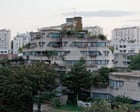
The French architect, who once had her nose broken by Jean-Marie Le Pen, created apartment blocks with cascading terraces that seemed to have surrendered to nature. They are still loved by their residentsWhen the French architect Renée Gailhoustet died in 2023, the residents of Le Liégat, a social housing block she completed in 1982, put up a large handmade sign saying: “Merci Renée.” Architects are often accused of designing impersonal rabbit hutches that they themselves would never deign to inhabit, but when Gailhoustet died at the age of 93, she had been living in her Liégat duplex in the Parisian suburb of Ivry-sur-Seine for more than 40 years.Outside her living room window, several storeys up, was a large cherry tree and a profusion of greenery. Characterised by their riotous informality, Gailhoustet’s free-plan apartment blocks invariably featured cascading terraces and loggias covered with a foot of soil, so residents could cultivate and enjoy un jardin derrière, a back garden. Continue reading…
- Cage fights at the White House! A gigantic arch! Trump’s gaudy plans for America’s 250th anniversary
 by Catherine Slessor on 2026-02-06
From minting coins featuring his own face to covering buildings with gold, the president’s proposals for marking America’s semiquincentennial say a lot about the country’s backwards outlookWhen the United States celebrated its bicentennial on 4 July 1976, it marked the occasion with the opening of the National Air and Space Museum’s exhibition hall on Washington DC’s National Mall. Designed in a boldly modernist style by the blue-chip firm Hellmuth, Obata + Kassabaum (now HOK), it stood as a testament to American aeronautical derring-do, from the Wright brothers to the moon landings.At the time, even though the stench of Republican political shenanigans was never far off, with Gerald Ford replacing the disgraced Richard Nixon in 1974, there was a sense of a nation embracing progress, looking forward, not back. For all the historical re-enactments of Washington crossing the Delaware, the US chose to see itself through the prism of modernity and technological puissance. Continue reading…
- ‘We can learn from the old’: how architects are returning to the earth to build homes for the future
 by Yassin El-Moudden on 2026-02-05
Rammed earth sourced from, or near, the grounds of a proposed building site is attracting attention as an eco-friendly construction materialFrom afar, the low-rise homestead perched in the Wiltshire countryside may look like any other rural outpost, but step closer and the texture of the walls reveal something distinct from the usual facade of cement, brick and steel.The Rammed Earth House in Cranborne Chase is one of the few projects in the UK that has been made by unstabilised rammed earth – a building material that consists entirely of compacted earth and which has been used as far back as the Neolithic period. Continue reading…
- No 1 for nuns! Níall McLaughlin is architecture’s discreet daredevil – and deserves its top award
 by Catherine Slessor on 2026-01-29
Forget brash statement projects – Riba’s prestigious gold medal has gone to a pivotal figure who works above an Aldi and designs billowing bandstands, jewel-like chapels and buildings that change colourWhen Níall McLaughlin was shortlisted for the Stirling prize in 2013, for designing an exquisitely jewel-like chapel for a theological college near Oxford, he brought along his client to the prize-giving ceremony. It was the first (and possibly last) time a group of Anglican nuns had ever graced such a spectacle.Despite clearly having God on his side, he lost out that year, but eventually scooped the Stirling in 2022, for the New Library at Magdalene College, Cambridge. Founded in 1428, Magdalene’s alumni include Samuel Pepys, Norman Hartnell and Bamber Gascoigne. Oxbridge colleges expect their buildings to endure, and McLaughlin delivered a reassuringly robust and handsomely detailed exemplar, mixing crisp planes of brick that recalled the American modernist Louis Kahn, with top notes of English Arts and Crafts, echoing the gabled forms of the college’s historic courts. Continue reading…
- I visited Runcorn for the first time this week – and was blown away by its magic | Adrian Chiles
 by Adrian Chiles on 2026-01-28
Decades after I first befriended one of the town’s sons, I finally got to see the place – or at least its glorious bridgeIs it possible to have a soft spot for a place you’ve never been to and know next to nothing about? I think it is, in my case anyway, for I have developed warm feelings for Runcorn. On reflection, this has been in the making, quietly, in my subconscious, for a long time. In the last century, I was at university with a lad from Runcorn and, as he is the only person I have ever known from Runcorn, he is bound to colour my sense of the place. Big Everton fan. Could occasionally, like most of us in our gang, get a bit boisterous on a night out, but otherwise had a heart of gold. Reconnected with him recently and the boisterousness seems to have dissipated while the heart of gold still beats. I met his dad once, too; he was nice as well. All good for my own personal sense of Brand Runcorn.Also in the last century, I got talking to the bloke sitting next to me on a train out of Euston. I was squashed up next to him and his suitcases. He had a lot of luggage, so wherever he was going it looked as if he would be staying there a while. He turned out to be American, and a Mormon. I had, not long before, been to Salt Lake City, so we had a nice chat about that. When I asked him where he was heading, he said Runcorn. This led me to ask why. He replied: “Because that’s where the Lord has sent me.” There’s no answer to that, or at least not one I could think of as we rattled our way north. A shroud of mystery now settled over my idea of Runcorn.Do you have an opinion on the issues raised in this article? If you would like to submit a response of up to 300 words by email to be considered for publication in our letters section, please click here. Continue reading…
- ‘It’s the underground Met Gala of concrete murderzone design’: welcome to the Quake Brutalist Game Jam
 by Rick Lane on 2026-01-22
Quake Brutalist Jam began as a celebration of old-fashioned shooter level design, but its latest version is one step away from being a game in its own rightA lone concrete spire stands in a shallow bowl of rock, sheltering a rusted trapdoor from the elements. Standing on the trapdoor causes it to yawn open like iron jaws, dropping you through a vertical shaft into a subterranean museum. Here, dozens of doors line the walls of three vaulted grey galleries, each leading to a pocket dimension of dizzying virtual architecture and fierce gladiatorial combat.Welcome to Quake Brutalist Jam, the hottest community event for lovers of id Software’s classic first-person shooter from 1996. First run in 2022, the Jam started out as a celebration of old-school 3D level design, where veteran game developers, aspiring level designers and enthusiast modders gather to construct new maps and missions themed around the austere minimalism of brutalist architecture. Continue reading…
- Schools, airports, high-rise towers: architects urged to get ‘bamboo-ready’
 by Yassin El-Moudden on 2026-01-22
Manual for building design aims to encourage low-carbon construction as alternative to steel and concreteAn airport made of bamboo? A tower reaching 20 metres high? For many years, bamboo has been mostly known as the favourite food of giant pandas, but a group of engineers say it’s time we took it seriously as a building material, too.This week the Institution of Structural Engineers called for architects to be “bamboo-ready” as they published a manual for designing permanent buildings made of the material, in an effort to encourage low-carbon construction and position bamboo as a proper alternative to steel and concrete. Continue reading…
- Almshouse to haunted student digs: historic Newcastle building to become affordable homes
 by Mark Brown North of England correspondent on 2026-01-20
Keelmen’s hospital, which housed dockers in 1700s, awarded £4.6m lottery grant after lying empty for 16 yearsIt was built 300 years ago as an almshouse for men who did some of the most backbreaking and dangerous work on the River Tyne.Most recently it provided fun, if chilly, accommodation for students. Now a new chapter is to be written in the history of a building considered the most at-risk structure in Newcastle, with the announcement of £4.6m lottery money to convert it into affordable housing. Continue reading…
- Historic market in Kinshasa ready to reopen to a million shoppers a day after five-year makeover
 by Sarah Johnson on 2026-01-15
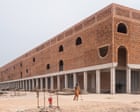
Long criticised as overcrowded and filthy, the city’s Zando marketplace has had an elegant and sustainable redesignSelling vegetables was Dieudonné Bakarani’s first job. He had a little stall at Kinshasa Central Market in the Democratic Republic of the Congo. Decades later, the 57-year-old entrepreneur is redeveloping the historic marketplace that gave him his start in business to be an award-winning city landmark.Bakarani hopes to see the market, known as Zando, flourish again and reopen in February after a five-year hiatus. The design has already been recognised internationally; in December, the architects responsible for it won a Holcim Foundation award for sustainable design. Continue reading…
- Country diary: A chilly tour of our historic churches (while the tourists are away) | Virginia Spierss
 by Virginia Spiers on 2026-01-15
St Kew, Cornwall: Midwinter is the best time for us to visit heritage sites and speculate on legends, starting at the secluded St Winnow’s churchThe stained glass window of St Kew’s church, with a tamed bear at the saint’s feet, is temporarily out of sight, penned in by a jumble of scaffolding. On a chilly hilltop a few miles to the south, St Mabyn’s tower features weathered carvings of heraldic beasts, including a muzzled bear pointing its snout northwards; inside, bears feature on crests of the Prideaux, Barratt and Godolphin families. Midwinter, when Cornwall is relatively free of visitors’ traffic, is a time to visit historic sites and speculate on legends, Arthurian myths and associated early reverence for the pole star encircled by the constellation of the Great Bear.Secluded St Winnow, further south alongside the tidal River Fowey, is first on our itinerary, reached along narrow, winding lanes. The church is dedicated to a Celtic missionary who is depicted with a handheld grindstone – this holy man neglected the task of milling the monks’ flour in favour of more prayer time. Continue reading…
- Letter: Frank Gehry obituary
 by John Keenan on 2026-01-14
Dramatic plans by Frank Gehry for the redevelopment of the King Alfred Leisure Centre on the seafront at Hove, East Sussex, strongly divided opinion. In 2003, Gehry launched the £290m project featuring a cluster of four towers – the tallest of them rising to 38 floors – next to a swimming pool, sports hall and a winter garden. The eccentric design was intended to evoke crumpled Victorian dresses.Five years later, the plan was abandoned, a victim of the financial crash. Gehry told the Guardian journalist Jonathan Glancey: “Don’t go there! I guess I never did understand your planning system. I put it down to ‘scared of Frank’ syndrome.” Continue reading…
- David Bowie’s childhood home to open to public after 1960s restoration
 by Laura Snapes on 2026-01-08
South London house to feature never-before-seen archival items and creative workshops for young peopleOn the evening of 6 July 1972, thousands of young people across the UK had their lives changed when the sight of David Bowie performing Starman on Top of the Pops was beamed into their living rooms.Come the end of 2027, Bowie fans will be able to walk the very floorboards where the young David Jones had his own Damascene cultural conversion, when his childhood home in south London, is opened to the public for the first time. Continue reading…
- Ever been caught short? Here’s the good news: a great British toilet revolution could be on the way | Eddie Blake
 by Eddie Blake on 2026-01-05
Inspired by ministers and councils willing to spend a penny, architects are building beautiful, functional loos – a first step towards restoring civic prideWhy do we have so few public toilets in UK cities? It’s hard to think of two more fundamental social needs than a) not being forced to relieve yourself on the street and b) not having other people relieve themselves on the street – yet the public toilet is an ignored and vanishing public amenity. The British Toilet Association reports that 40% of public toilets have closed since 2000 – Victorian facilities in particular attract developers, not least because their dignified buildings endure: solidly built, centrally located and still embedded in the daily flow of the city. When maintenance costs are high and councils are struggling, it is easy to convert a sturdy urinal into a fancy bar or flower shop that brings in rent.Against this backdrop, a new wave of architects has begun to emerge who are reframing the problem and bringing new expression to the building type. They are supported by innovative councils and, sometimes, government grants. This may mark the start of a trend, driven by a convergence of conditions: growing public attention to access, the clear scarcity of toilet provision and a renewed sense of purpose within local authorities. These architects are emphasising not only public toilets’ necessity, but also the potential for public luxury. Continue reading…
- Bawdy Beryl, slick Seurat, titanic Tracey and the glory of Gaudí: the best art shows and architecture in 2026
 by Jonathan Jones , Adrian Searle and Catherine Slessor on 2025-12-29
Must-sees include Beryl Cook’s postwar brilliance, Tracey Emin’s new highs, Frida Kahlo’s confessions – plus Google’s HQ and Gaudí’s finally finished fever dream Continue reading…
- The English House by Dan Cruickshank review – if walls could talk
 by Stephen Smith on 2025-12-29
A deep dive into the creation of eight buildings from the 1700s to the 1900s tells some very human storiesHistory used to be about wars and dates, but to the architecture writer and TV presenter Dan Cruickshank, it’s more about floors and grates. In his new book, he takes a keen-eyed tour of eight English houses, from Northumberland to Sussex, dating from the early 1700s to exactly 100 years ago, and ranging from an outlandish gothic pile to one of the first council flats. In Cruickshank’s pages, classical influences from Rome and Greece give way to a revival of medieval English gothic and the emergence of modernism.He is particularly interested in who commissioned and built his chosen dwellings, and how they got the job done. It’s a new spin on the recent fashion for historians to explore the homes of commoners, as opposed to royalty and aristocrats, in order to tell the life stories of their occupants. This probably began with the late Gillian Tindall, who wrote a highly original book about the various tenants of an old house by the Thames next to the rebuilt Globe theatre. That was followed by several series of A House Through Time, fronted by Traitors star David Olosuga. Continue reading…
- Saving Kyiv’s heritage: a city rebuilding itself in the shadow of war
 by Luke Harding in Kyiv on 2025-12-28
Volunteers and neighbours are restoring the century-old homes as an act of defiance against Russia’s assaultLesia Danylenko proudly showed off her new front door. Volunteers had nicknamed its elegant transom window the “croissant”, a nod to its curved shape. “I think it’s more of a peacock,” she said, admiring its branch-like details. The restoration project at one of Kyiv’s early 20th-century art nouveau houses was supported by residents, who celebrated with two pavement parties.It was also an act of resistance against Russia, she explained: “We are trying to live like normal people despite the war. It’s about arranging our life in the best possible way. We’re not afraid of staying in Ukraine. I could have left the country and moved away to Italy or Germany. Instead, I’m here. The new entrance shows our commitment to our homeland.” Continue reading…